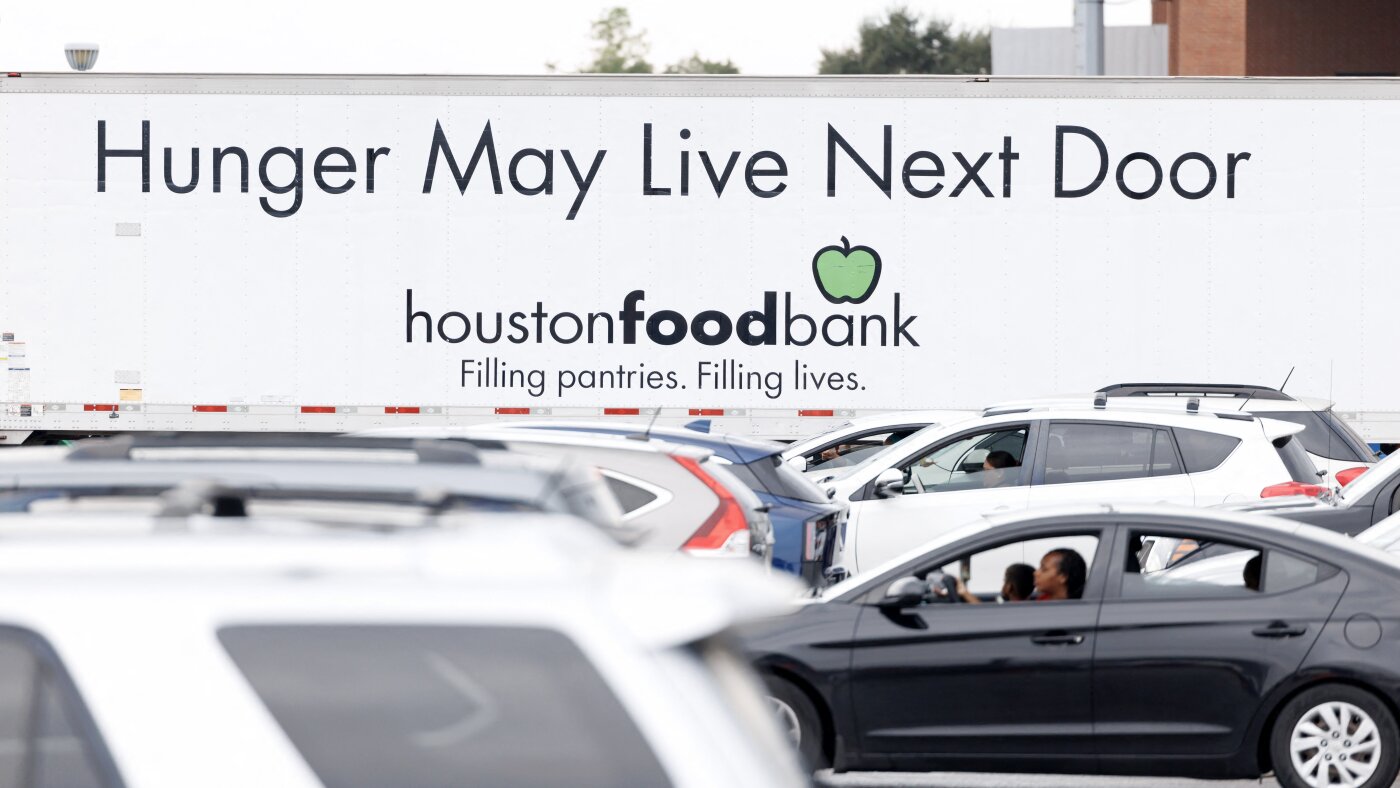
Food insecurity Fed survey rise - part of daily Wall Street coverage tracking market trends and investor reaction. A recent survey from the Federal Reserve Bank of New York indicates that food insecurity currently affects more families than at the height of the COVID-19 pandemic. The finding suggests ongoing economic pressures on households, even as broader economic indicators show recovery.
Live News
Food insecurity Fed survey rise - part of daily Wall Street coverage tracking market trends and investor reaction. Integrating quantitative and qualitative inputs yields more robust forecasts. While numerical indicators track measurable trends, understanding policy shifts, regulatory changes, and geopolitical developments allows professionals to contextualize data and anticipate market reactions accurately. According to a report by NPR, data from a new survey conducted by the Federal Reserve Bank of New York reveals that food insecurity has worsened in the current economic environment, surpassing the levels seen during the coronavirus pandemic. The survey measures the share of households reporting difficulty affording enough food, and the latest results show a higher percentage than at any point during the pandemic-era peak. While the precise figures from the survey have not been widely released, the trend underscores a reversal from earlier expectations that food hardship would decline as the economy reopened. The survey is part of the New York Fed’s ongoing monitoring of household financial well-being and captures a broad cross-section of U.S. families. The rise in food insecurity comes despite a generally strong labor market and elevated consumer spending, pointing to uneven recovery dynamics. Factors such as elevated food prices, reduced pandemic-era benefits, and lingering inflation may be contributing to the strain on household budgets.
Food Insecurity Surpasses Pandemic Levels: New Fed Survey Highlights Economic Strain Many investors now incorporate global news and macroeconomic indicators into their market analysis. Events affecting energy, metals, or agriculture can influence equities indirectly, making comprehensive awareness critical.Combining technical analysis with market data provides a multi-dimensional view. Some traders use trend lines, moving averages, and volume alongside commodity and currency indicators to validate potential trade setups.Food Insecurity Surpasses Pandemic Levels: New Fed Survey Highlights Economic Strain Many traders use alerts to monitor key levels without constantly watching the screen. This allows them to maintain awareness while managing their time more efficiently.Many traders use scenario planning based on historical volatility. This allows them to estimate potential drawdowns or gains under different conditions.
Key Highlights
Food insecurity Fed survey rise - part of daily Wall Street coverage tracking market trends and investor reaction. The use of predictive models has become common in trading strategies. While they are not foolproof, combining statistical forecasts with real-time data often improves decision-making accuracy. Key takeaways from this development center on the persistence of cost-of-living pressures. Food insecurity is often a lagging indicator of financial stress, and its increase suggests that many households have not fully recovered from the economic shocks of the past few years. The data from the New York Fed survey may signal that inflation, particularly in essential categories like groceries, continues to erode purchasing power for lower- and middle-income families. For the broader economy, rising food insecurity could affect consumer behavior, potentially shifting spending away from discretionary goods and toward staples. This trend might influence retail sectors differently: discount grocers and value-oriented food chains could see increased demand, while premium or non-essential food brands may face headwinds. Additionally, elevated food insecurity could prompt policy discussions around expanding federal nutrition assistance programs or other social safety nets, which may have fiscal implications.
Food Insecurity Surpasses Pandemic Levels: New Fed Survey Highlights Economic Strain Investors may use data visualization tools to better understand complex relationships. Charts and graphs often make trends easier to identify.Real-time tracking of futures markets can provide early signals for equity movements. Since futures often react quickly to news, they serve as a leading indicator in many cases.Food Insecurity Surpasses Pandemic Levels: New Fed Survey Highlights Economic Strain Some investors find that using dashboards with aggregated market data helps streamline analysis. Instead of jumping between platforms, they can view multiple asset classes in one interface. This not only saves time but also highlights correlations that might otherwise go unnoticed.Some investors rely on sentiment alongside traditional indicators. Early detection of behavioral trends can signal emerging opportunities.
Expert Insights
Food insecurity Fed survey rise - part of daily Wall Street coverage tracking market trends and investor reaction. Some investors integrate technical signals with fundamental analysis. The combination helps balance short-term opportunities with long-term portfolio health. From an investment perspective, the rise in food insecurity may have nuanced implications across sectors. Consumer staples companies—especially those with strong private-label or value offerings—could potentially benefit from trading-down behavior. Conversely, companies heavily reliant on discretionary food spending or restaurant traffic might face softer demand. The data also underscores the uneven nature of the economic recovery, which may keep pressure on the Federal Reserve to consider the real-economy impacts of its monetary policy stance. While overall inflation has moderated, the persistent hardship indicated by the New York Fed survey suggests that higher interest rates and reduced pandemic support are still weighing on vulnerable households. Investors may want to monitor upcoming consumer sentiment and spending data for further signs of strain. Any policy response—whether through legislative action or Fed communication—could create tailwinds for certain sectors. As always, individual company performance will depend on factors beyond macroeconomic trends. Disclaimer: This analysis is for informational purposes only and does not constitute investment advice.
Food Insecurity Surpasses Pandemic Levels: New Fed Survey Highlights Economic Strain Investors often rely on a combination of real-time data and historical context to form a balanced view of the market. By comparing current movements with past behavior, they can better understand whether a trend is sustainable or temporary.Market anomalies can present strategic opportunities. Experts study unusual pricing behavior, divergences between correlated assets, and sudden shifts in liquidity to identify actionable trades with favorable risk-reward profiles.Food Insecurity Surpasses Pandemic Levels: New Fed Survey Highlights Economic Strain Historical patterns can be a powerful guide, but they are not infallible. Market conditions change over time due to policy shifts, technological advancements, and evolving investor behavior. Combining past data with real-time insights enables traders to adapt strategies without relying solely on outdated assumptions.Observing how global markets interact can provide valuable insights into local trends. Movements in one region often influence sentiment and liquidity in others.